



Season 1, Episode 3
How MSPs Can Build a Powerful Referral Engine
In this episode of 2Techy, Lauren Keeves is joined by James Davis from The TSP Advisory and Derek Morgan from Referit to unpack the real power of referral marketing for MSP businesses. They break down the difference between word of mouth and a systemised referral engine, share practical steps for building referral partnerships, and reveal why most businesses are missing out on untapped opportunities sitting right in their CRM.
From shifting mindsets and clarifying your ideal customer profile to leveraging partner networks and tracking results, this conversation is packed with actionable insights. If you’re ready to move beyond sporadic referrals and build a predictable growth engine, this episode will show you how to get started.
brains, bytes
& bold moves
transcript
Lauren Keeves
Let's kick things off with the fundamentals.
So, Derek, when we say referral marketing, what exactly are we talking about?
I know that a lot of partners may go, oh, well, isn't it just word of mouth?
Can you just start off by telling the viewers what the difference is between referral marketing and their traditional word of mouth?
Derek Morgan
Yeah, I think really good question, Lauren.
The word of mouth or referred leads, people get referred leads in, but it's not an organised process, it's not a predictable process. It's just something that happens ad hoc. Whereas with referral marketing, it's having a systemised or programmatic approach to actually getting referrals so that you can do it on demand so that it becomes actually predictable revenue. And this particularly applies more so to referral partnerships as opposed to customers necessarily because customers are typically not good referrers.
But there's certain things that you can actually do as part of a referral marketing programme where you run events or you do, you know, collaborative marketing. There's a whole range of things that you can do that you can systemise and go to market together with customers and also referral partners.
And that's the difference, you know, having a systemised approach that you can scale on demand essentially.
Lauren Keeves
Yeah, yeah. I mean, there straight away, there are so many questions off the back of that answer. But to dive into tech businesses specifically, why are referrals so critical?
Derek Morgan
Yeah, it's not just for, it's not just for tech businesses. It's anybody in the B2B. And I think when technology businesses, MSPs as an example, start to think more broadly about their customer base and more broadly around referral marketing, it changes their mindset around how they engage with customers, how they engage with potential referral partners.
And I'm probably going a little off track here, but yeah, there's so much noise in the marketplace right now. And particularly for SMB SME businesses, the cost of advertising, the cost of lead generation through traditional marketing. And I'm not saying you shouldn't do it, but it's expensive and it's challenging to get right.
So whilst you're doing the outbound, the cold outreach and you're doing inbound marketing, you can actually inject a referral marketing strategy into your existing marketing sales activity so that it becomes a really big lever for the activity that you're already doing anyway.
And I think that's where coming back to your original question, the disconnect between having a referral marketing mindset versus just getting referrals.
Yeah, we've got great relationships. We get some referrals when you can actually tie a referral marketing process into your marketing lead generation and your nurturing and engagement and your customer success processes. That's where you get a lot more leverage out of your effort just by being focused and following through and following up.
Lauren Keeves
Yeah, well, that's definitely something that I see when a lot of MSPs come to me initially. And I ask, what's your main source? It's all word of mouth. And they kind of think it ends there. There's not much that they can do. Or they think, oh, you know, they'll just happen when the time's right. “My clients already kind of sends a few, you know, things through here and there”.
But I guess their mindset needs to shift, like you say, to turn it into a bit more of an engine.
James, what are you seeing in this space?
James Davis
That passiveness. It goes to a lot of lot of things that a lot of technology services businesses are doing these days.
They're sitting and waiting for things to happen, either because they've got 1 foot in exit and they don't care that much, or they've hit their sort of growth size that they're comfortable with or, or they're sort of getting complacent around how they've grown their business.
And the challenge for a lot of partners out there at the moment is the fact that it's the like the most crowded the market has ever been. There's so much competition out there and everyone's shoveling out the same sort of generic rubbish.
So that noise has never been higher in the market either.
So clients are looking for something different and they're looking for those sort of trusted partners. They don't know how to get them. And so a lot of us are defaulting to what we did to create our businesses and grow it in the first place, which was our friends and family circle in the local area that we're in. “Do a good job and some business comes” - that tap is slowly being turned off tighter and tighter and tighter. And we're just seeing those drips come through.
And while that's been OK for the last couple of years to sort of create enough new business for a lot of the smaller partners, what a lot of partners are finding now is they're losing clients. The churn's higher than ever. They can't replace them fast enough because they've got no engines, no mechanisms, no strategy in place and nothing is a quick fix. And this is where a lot, I see a lot of partners are just panicking and they're going to cost cutting rather than investing in that growth activity.
Lauren Keeves
And Derek, what are some of the challenges off the back of that that you're seeing or any of the misconceptions around referral marketing?
Derek Morgan
I think there's just a lack, a little bit of, how do I put this politely? It's really noisy market. Coming back to James's point, it's a really noisy market out there and all of the noise around marketing is predominantly around campaign-driven events. And so businesses are looking for always chasing those cold logos, the next new inbound lead that's relatively cold. And to James's point, everybody's chasing the same market with the same pitch. So for clients to be able to find that point of difference.
But what I think where businesses miss a huge opportunity is the fact that their existing clients, technology's just a fraction of their business, right? It's a fraction of their business spending. It's a fraction of their focus, their core business. They have a whole host of vendors, suppliers, advisors, representatives calling on their business. And your best clients are typically using quality providers. And those quality providers have a large network of your ideal customers.
So I think everybody's so busy chasing campaign related marketing activities that they're not taking the time to just step back and focus on the relationship driven activity that they can drive as part of their QBR process or their regular customer follow up or as part of their account management processes as part of their customer success process.
There's some really simple questioning and engagement activities that you can inject into those conversations you're already having anyway that will ultimately lead to referrals, lead to new introductions.
And it's that speed of engagement that comes with referrals as opposed to it's much longer nurturing cycle when you're somebody's coming in relatively cold or you're picking them up as through a lead magnet and then having to nurture them and build that relationship slowly over an extended period of time.
When you when you're getting leads through referrals and you're doing it programmatically or in a systemised process, that speed of engagement becomes a lot faster because you've got that borrowed trust from an existing vendor or an existing, you know, customer so or sorry, an existing referral partner.
But the biggest mistake I see in the technology industry is they're looking to their technology vendors to be their referral partner.
So a technology vendor's got a whole host of your competition as their client base and they simply don't have enough volume of new clients to be able to feed every MSP using just MSPs as a technology vendor example or supplier example.
So when you actually stop looking at the technology industry for referrals and partnerships and you start to look at every other supplier, vendor, Rep, advisor that your best clients are using and go and look to add value to them and partner with them - you're now, you're now not competing with everybody else as far as, you know, traditional technology vendors and using them as a source of leads, if that makes sense.
Lauren Keeves
Yeah, you know, completely. And I think I want to go back to something you said a little bit earlier on there. And it does really boil down to having your ICP really clear. Starting off internally as well as being able to communicate that with your referral partners.
So have you got any best practices you can share around making it totally clear who your ICP is with your referral partners?
Derek Morgan
Yeah, it I mean your ideal customer - just reverse engineer your top 10 customers and then go and have a conversation with those top 10 customers around who their other supplier vendor Rep advisors are.
Because that process is going to that conversation is going to lead you into who is likely to be your ideal referral partner profile, because you know who your ideal customers are. They’re your top three, your top five. You want more of those.
So where are your customers hanging out?
Who are they hanging out with?
What networks are they involved in?
What events are they going to?
Because that's going to lead you to your ideal customers because they tend to congregate.
The other thing is that I guess from a referral partner perspective, yeah, it's again, it's just analysing who those customers, who your ideal customers are actually working with and then start to profile from there if you don't already have sort of clarity on who your next best referral partner might be.
And I guess the easiest way to actually get clients referring is actually think about who you can refer to your clients. Most businesses I talked to, they want referrals from clients, but they're not active referrers to clients. So I think the biggest missed opportunity for MSPs or any technology businesses, the sales and account executives are out active at industry events and networking events and etc, looking for leads, which yeah, that's great, but you'd be better off looking for connections to referral partners in those events.
But while you're doing that, you're going to meet lots of people who are not going to be your ideal client, but they might be a perfect introduction to one of your clients. So are you actually, do you have that referral mindset of giving first?
James, this is something that and Lauren, I know that you guys do this naturally, but it's a very, very easy thing for sales and account executives to adopt. And coming back to your point around customer retention, James. If you as a technology provider, you don't have unique products typically, right. You’ve typically got a vanilla or chocolate flavour of some piece of technology that there's a number of options.
But if you are the MSP or technology provider to this client who also sends them leads and helps them potentially generate new business, you are a trusted advisor, not just a technology provider. So now your ability to retain those clients and get more referrals gets elevated dramatically because you're just thinking about them and their business.
So if you really want to be on the front foot with that type of thing, right, we actually educate our partners around going to their clients and interviewing their clients and actually asking what is an ideal customer referral for them.
Just you might know, but you still just clarify that that's still what they're looking for.
But also what's an ideal referral partner because probably most of their businesses are not establishing referral partnerships. So, you get them thinking about that. Just having that simple conversation, you'll find clients will be asking you exactly the same thing. Then you can pass your message around who you're looking for from a partner perspective because that's where you really want to be introduced into partnerships because it's you're going to get a lot more referrals from a partner than you are going to get from a single client typically.
Lauren Keeves
So, yeah, if I follow along - it's about making it a two-way street. And also I guess from what you were saying, is lead by example and which compliments that two-way street. You know, show them what you would expect from them by showing the behaviours, you know, asking them about their ideal client so that they can keep it front of mind and therefore they can then, you know, reciprocate and ask the same questions back. And that's a nice way, I guess to break into the conversation what you are looking for to weed out some of the referrals that aren't a great fit.
James, you will know better than probably most people out there about the MSP owner mindset. And so, if they are moving away from owner led sales, and they have BDM or they have account manager, you know how awkward sometimes they can be and they don't want to come across as pushy or sounding desperate.
So how do you think that we get them to breakthrough that barrier so they can feel less awkward about having these conversations and letting them know, you know, this is what you're looking for.
James Davis
It sounds a little ridiculous, but just have a conversation like it's that simple. Everyone tries over-engineer this so, so much. Every everything we do in this industry is so over-engineered before we get started. We find all the reasons why it won't work.
You've got clients that you've been working for years. Every MSP owner will tell you we've got right relationships with our clients. Well, if we do, we should be able to just rock up to the site, give them a call or something and go. If you've looked at XYZ, I'll introduce you to this sort of person who has instant value. Like if your if your relationships are as tight as you claim they are, it's as easy as that. It's really not rocket science.
Problem is while the owners might have a long-standing relationship and they can probably do that as we are transitioning into more, more account managers around there, the account managers don't have relationships with those clients. They're passive order takers. They haven't invested time in getting to understand who they are as people. That's probably something that the owners has done quite well.
I might challenge how well they know and understand their clients businesses, but they know the people inside those businesses quite significantly cause they've been working with them 5-10-15-20 years plus. So they've got those personal relationships and this is where I think it's most important to step back and start to actually understand the client's business.
Most MSPs have super horizontal businesses. They don't have a specialisation in a niche. So you're already on the back foot because if we go back to what Derek was talking about, and you understand an ecosystem. An ecosystem in our world, in small businesses, often like the, you know, tribal selling is a term that's come up in the past where you understand their language, you understand who's out and about, who's involved in all these sort of things. And then building around that. We don't understand who our clients are working with. We don't understand:
Where they sit in their industry
Who they network with
Where they go and network.
So it's very hard for us to then actually provide real value because we don't know. And so I think there's a very obvious step if people aren't twigging to it yet. You need to go talk to your clients. And if we're not doing that, we're not going and asking them, asking about their businesses, we're going to keep commoditising and losing a lot of value. And it's going to be very difficult for us to claw that back.
It's a lot easier for someone new to walk in and go, “oh, hey, you're running a medical practice. Do you know XYZ? Do you know this vendor? Let me introduce you to here because you're probably having these problems”
Away you go - very different to that traditional provider that's been around for a while charging money and we're not really seeing the value anymore. So I think we just got to stop over engineering and just go talk to our bloody clients.
Lauren Keeves
Mind blown (haha!) Just have a conversation!
Derek Morgan
Yeah, no, it's a really valid point. You know, I tell often tell a story about $11.2 million in contracted business I picked up in six months from a partnership relationship that had been sitting in the CRM of this technology business for two years and nobody had actually just gone and followed up.
I knew the partner because I'd introduced them to that technology business 2 years before I went to work for them and nothing happened, you know. So the opportunity cost of, you know, the gold that is laying around in the existing client ecosystem right now to James's point, and in their existing CRM is, is massive, but it's an opportunity.
It's an opportunity cost that virtually every B2B business suffers from. But it's invisible because nobody's going looking for it, nobody's quantifying it, nobody's measuring it. Therefore, it just goes on and on and on and on and on. And, you know, so back to James's point, go have the conversation, have a look in this CRM. Who did you speak to six months ago that you actually never did anything with? And just go back and have a coffee with them. And I'm not saying don't do your cold outreach and don't do your top of funnel lead generation. But while you're doing that, don't just keep walking past activity that's just laying dormant and untapped.
Lauren Keeves
So I guess if we start getting practical now, so let's say the business owner has now decided they want to move away from relying on the sporadic referrals and start turning it into an engine. What would be the first thing that you recommend they do, Derek?
Derek Morgan
Get your list of your top ten clients and go and have a conversation with them. If you're meeting with them remotely, if you can meet with them for a coffee and actually have a mindset within your sales team that you're actually going to be fractional business development representatives for your clients. And you can go and have that conversation with your clients.
And you know if I was talking to James would be, “hey James, you're a fantastic client, love working with you. We know it's tough out there in the marketplace, how's business going for you, etc, etc” - your normal QBR type stuff. And go, “OK, look particularly this time of year or it can become a quarterly conversation, it's like, well, it's the end of the financial year here in Australia. Next financial year, our sales team are actually going to act as fractional business development people for our clients. So if we can refer business to you, we'll have a focus on it.”
You need to be genuine in this. And then it's like, “I think I know what's an ideal client for you. James, can you tell me also, do you have a partner programme? Are you running partnerships? Like what's an ideal referral partner for you? Because if our team can refer, we will.” Simple as that.
That conversation 8 or 9 times out of 10 will have your clients asking you exactly the same questions.
You know, but my encouragement to account executives and business owners doing that is be really genuine and have a giving mindset in passing those referrals and don't pass them with the expectation that you're going to get something back. You will get gratitude back, end of story. You'll get customer loyalty back, end of story. But don't sort of back off going through that process, even if the client's not referring to you, right? And then it's just a matter of it's really simple.
Once you get that mindset, you'll find opportunities that you can introduce into your existing customers. More importantly, your key accounts, your target accounts, the ones that you really want to build relationship with. Make sure you're looking to add value and referrals into them, whether it's introducing a partner that can solve a problem for them that's unrelated to what you do, but they have that problem.
Coming back to James's point around your client ecosystems, they have lots of challenges in marketing, sales, delivery, operations, finance. Build yourself a partner network of trusted advisors that you can introduce where they're having problems. That's another way of maintaining value when you've got a long deal or lead cycle. But yeah, just coming back to that simple first conversation.
Lauren Keeves
Yeah, I love that term fractional business development for our clients.
James, do you have anything to add to that?
James Davis
Stop looking inwards and start looking outwards. Apart from go talk to your clients, which I can't believe I have to keep saying over and over again.
It's also a bit to the point Derek made before around the whole expecting now our vendors to provide us leads. I don't know outside of the mid-market enterprise level where that's a that's a real thing. In the SMB space, how are vendors ever going to get you leads? I don't know why we deluded ourselves as an industry to think that’s it. But what it's showing is really the mindset of us.
We're really trying to be an order taker. Silver bullet, get me new business immediately. With as little work as possible. I think we've really got to take a deep look at ourselves and go, what do we actually do? We might be able to do that as a commodity basis, but then everyone's doing it. So then it becomes an arms race to who's most visible.
If we're really that sort of more boutique-y, white glove service type tech partners or you've actually got to provide value, you've got to be active, you've got to be present, you've got to be show expertise.
Things don't happen and fall easily onto your plate until you establish that clear brand, that ecosystem where people are educated enough to make a buying decision. That's where everyone seems to forget.
We can work with really complex stuff here and this is where we need other people that get us and where we sit into that ecosystem to add validation to what we do. Otherwise we're just aiming for the bottom of the barrel type stuff and competing on price. And when I talk to a lot of partners and the owners of that, none of them actually want to be that, but that's how they act.
So really easy way I can summarise this for everyone is you got to act the way that you want to be treated. If you want to be a trusted advisor and be up at the top of the chain as a strategic advisor, you got to act like that. You want to act like a commodity sort of service person, that's what you're going to get. So if you're if you're struggling with your client base because of that perception, well, it's probably on you in the way that you approach everything. So change that mindset. But more importantly, you've actually got to execute on it and change the way that you approach things.
Lauren Keeves
Now with every sort of marketing engine, it's also really important that we're tracking results. Derek, what are some recommendations to be able to manage and make sure that the referral marketing agent that they've been building hopefully off the back of watching this is actually successful?
Derek Morgan
Yeah, well, the good thing about having a programmatic or systemised referral partnership programme, it's not high volume, right? So it is you can systemise it and duplicate it through your sales team quite successfully. It then comes down to the tracking and management of it is a really important piece. The challenge always comes down to everybody's got their own CRM, everybody's got their preference of communication platform. Is it Teams? Is it chat? Is it you know, whatever it is it WhatsApp, is it Facebook? There's just so many different ways that people communicate LinkedIn message, etc. That becomes really problematic. And then everybody's CRMs are invisible to each other.
So building or having a common platform that every that can be standardised across your referral partner networks is really important. And then it becomes basically a training ground for systemising and duplicating a process through your entire ecosystem.
So, you know, we obviously advocate for and use, Referit as an agnostic partner platform for SMBs and SMEs because it can integrate into everyone's CRM so that it plays nice. We're not putting up these barriers like some platforms do and then having a turnkey process that salespeople don't like doing data entry, salespeople don't like, they will not go and have conversations and close deals. They don't want to do data entry and reporting. So the more that you can systemise that so that it's tracked through activity, the better clarity and visibility that you're going to have around the analytics and the things that are moving the needle.
Short answer, have some weekly, monthly KPIs around online and in person networking events and make sure that you're in the right rooms because not all networks are created equal.
So if you're doing a lot of networking and you're not getting the result, it's usually either your message to market and who you're looking for or you're in the wrong room. So they're both pretty easy to change.
And then just making sure that you've got that core cadence and follow up cadence with the scripting of what's your account management team going to say at the next QBR? What are your customers’ looking for as far as either an internal referral or a direct referral from a client? What are the things that you're going to do this month around co-creation of content with a client or an event with a client that they can bring their peers, their networks, their suppliers, advisors into it so that you're actually adding value through that activity. And by default, your clients are bringing their network to that information or to that in event, whether it's a webinar or in person. So what are the things that you can do that are going to drive that engagement and cocreate it, co-create engagement.
Lauren Keeves
And James from your side, who should be the one internally driving this to make this happen.
James Davis
It's to come from the top down. It's the owner.
And let's be honest, in the majority of partners it’s still owner led sales, even when they've got account managers. They need to lead by example.
If we're setting a goal that we want to grow and we need to actually execute on that, we need to implement those measures where it is, you know, tracking the source of something in our CRM, having our weekly sales meetings and have some metrics on how many referrals we've given to our clients. Things like that – it needs to come from the top. And we need to start hiring the right people.
If you expect order takers to magically turn around into the best networkers and business development people. It's unlikely to happen that there's some that just needs some training and some guidance and they'll do it. But it's very much a personality thing. So get the same result, keep getting the same results is a bit of insanity. We need to change our approaches and be a bit more holistic and a bit more brutal on it as well. Otherwise we're just going to keep getting the same results.
Lauren Keeves
Exactly. Now, Derek, we dived straight in at the beginning and I'm keen to share with the viewers who is Derek Morgan? Why are you so passionate about referral marketing? And yeah, tell us a little bit about yourself.
Derek Morgan
So yeah, I've got a background in business development over 30 odd years through services business, financial services, technology start ups, scale ups and enterprise tech sales.
In every role, regardless of whether there's been a marketing budget behind the sales activity or not, I've always actually had to go on, you know, basically find and generate my own leads and own sales. And it was something that became intuitive or natural for me. But for a lot of businesses they didn't have the same process. And so we built some systems and processes that we're working to, but we weren't seeing that in the marketplace.
So we built Referit as a piece of technology to actually turnkey that partnership process and referral marketing process for SMB and SMEs because there's a lot going on at enterprise level, but it requires big investment, lots of data, it's complex. So we wanted to create a turnkey solution and then technology as technologists know, doesn't sell itself.
Then we created the referral marketing formula and referral marketing ideas as a way of actually having a conversation in the marketplace around referral partnerships for SMB and SME.
So that's a very long story cut short, but yeah, basically challenges hitting KPIs was what's led to the evolution of this business and our message to market.
Lauren Keeves
Yeah, amazing. And James, obviously many of the audience will be familiar with you, but how can you particularly help clients with referral marketing?
James Davis
It's a very good question. I can only help people change their mindset so much. What I've been trying to do though, behind the scenes is build that ecosystem myself.
It's people like yourself, Lauren, Derek – I’ve got a huge amount of subject matter expert partners around the region that I joined the dots for to help partners because it’s a big challenge for partners themselves. They’re having to change their approach and their business transform. There's only one of me. I'm basically running at capacity any one time. I can only help so many people at once, but there's so many different people out there that can actually help partners get Better Business results.
And everyone knows how uncohesive our region is. There's all those little pockets and silos. I've been just fortunate enough from the roles and what I've, what I've done over the last few years sort of be above everything. And it's just been a pleasure to introduce different people to different people to see better outcomes for the partners.
And I just put it out there that for the ones that have been more successful in the region and, and are going to continue and going to keep growing, they've transformed how they're doing things. They're modernising what they're doing, not just delivering what sort of technology, but how they're actually engaging and interacting with their clients.
And the traditional sort of businesses are becoming static and stagnant and a lot of going backwards because of client churn increasing. Whether it's controllable or not, things are changing hugely in the market. And what we did in the past isn't going to be successful in the future.
So if we don't have that trusted network of advisors, you're solely reliant on being an owner and we're already busy running, looking inwards, facing our business. How are you going to change to meet your clients’ needs? And so that's why I try and do behind the scenes is just get more introductions, build that more cohesive ecosystem just so we can see more successful partners.
Lauren Keeves
Yeah, great. Well, this conversation has been really insightful. And I hope the viewers take something from it, I guess to leave with some final thoughts and the best way for the audience to kind of reach out and connect with both of you. James, your details first.
James Davis
Just find me on LinkedIn. Most people watching this will be following me.
And then my final bit of wisdom might say for maybe the 5th or 6th time, just go and talk to your clients. Stop making excuses to look at engineering, some sort of bit of tech in your company or worrying about some other problem.
If you don't talk to your clients, they're not going to be clients for much longer. I can guarantee that things have changed too much. So go and talk to your clients.
Lauren Keeves
And Derek, how can people find you?
Derek Morgan
Yeah, similarly on LinkedIn, if you search for referral marketing ideas, you'll find me. And yeah, referralmarketingideas.com
We've got some free tools and resources that you can access there in and around our referral marketing formula.
Lauren Keeves
Amazing. Well, thank you both for joining me today. We will catch up again soon.
Derek Morgan
Thanks.
I appreciate the time.
James Davis
Thanks for having me.

listen


Latest Episode:
"How MSPs Can Build a Powerful Referral Engine"
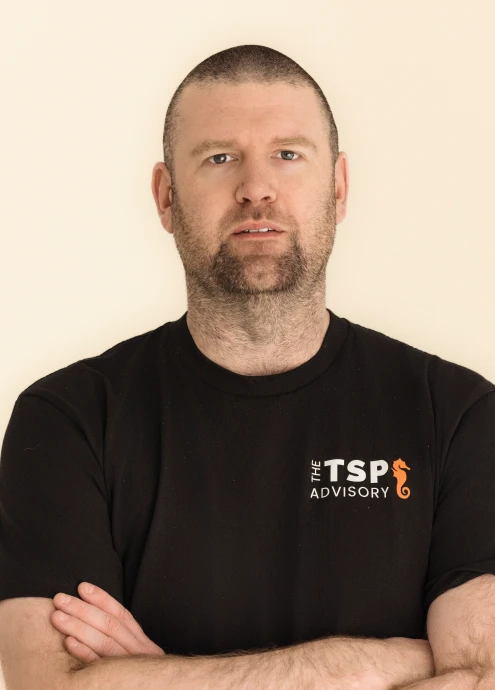
James Davis
Fractional Chief Strategy Officer
The TSP Advisory
James Davis is the longest-serving Coach/Consultant/Advisor dedicated to the Technology Services Industry across the APAC region. As a trailblazer, he was the first operations consultant in APAC, founded the region's first MSP coaching firm, launched the Pax8 Academy, and now leads as the first Fractional Chief Strategy Officer. With unmatched experience and insight, James helps elevate the industry, empower business owners to achieve stronger outcomes, and shape the next generation of leaders.

Derek Morgan
Founder
Referral Marketing Ideas & Referit
Derek Morgan is the founder of Referral Marketing Ideas and creator of the Referral Marketing Formula, helping SMBs and technology businesses turn relationships into predictable revenue. With over 30 years of experience in business development across financial services, technology startups, and enterprise sales, Derek has mastered the art of building strategic partnerships that drive growth. His passion for simplifying referral marketing led to the development of Referit, a platform designed to systemise and scale referral programs for SMEs. Derek is a trusted advisor for businesses looking to move beyond sporadic word-of-mouth and create a structured, repeatable referral engine.