



Season 1, Episode 4
Navigating Cost Optimisation and Value Creation in 2026
In this episode of 2Techy, Lauren Keeves sits down with James Davis from The TSP Advisory to unpack the biggest opportunities and challenges facing MSPs as they head toward 2026. Together, they explore what rising costs, shifting client expectations, and rapid advances in AI and automation really mean for service providers. And ultimately, how MSPs can stay ahead of the curve.
From redefining your value proposition and strengthening client engagement to understanding the evolving role of the internal IT manager, this conversation is packed with practical insights and strategies you need to prepare for what’s next.
brains, bytes
& bold moves
transcript
Lauren Keeves
Welcome back, James. Good to have you again.
James Davis
Thank you for having me. At I haven’t been booted off yet. So, we'll see how this session goes.
Lauren Keeves
Yeah, we’ll see. This could be the deal breaker here.
But, well, this, time we are going to be talking about 2026 it’s the start of the year predictions. What's upcoming as well as, you know, what we know is coming in the year ahead and how partners can plan for it and strategies they need to put in place now. And stop delaying. Stop procrastinating.
So, to start off, the hot topic is cost optimization. So, partners we saw last year got questioned and challenged quite regularly around the value and the costs and the ROI on their tech spend. And we see that more happening over 2026, and how they can start combating that and having those conversations.
So, James, from your side and the partners that you speak to and in the industry, what do you think we can do about helping partners with cost optimization?
James Davis
It's a, it's an important topic. I think it is actually what I'd hang my hat on as, go to market strategy for the year as well. For a multitude of reasons. Every partner be from the big end of town to small. And often they're all having these conversations in different ways, and it's really not, it's not a surprise when our economies are a bit tight and people are just overspending on technology.
But let's let's be honest as well. So, for a lot of partners, they're not not used to these conversations that are always sort of in question on value in different ways. But legitimately the clients are getting more savvy around what they're doing. They're either ramping up to sell and exit their business. Are they going on that trajectory, making decisions based on that, or they're looking at what ROI of actually getting on their technology and where they can they invest that to actually get growth, get efficiencies, drive profitability like things that business people actually care about.
We've gone past that point of like technologies. They are in place. And it was more why adoption is not even the right word. It was more like everyone transitioning all their business practices into technology.
That's sort of happened for a majority of industries in our region now. It's like, how do we actually leverage it for real business income outcomes.
It's the stuff that we we've been talking about for as an industry for a long time. But now, as technologies democratised down into SMB space, plus the demographic change of ladies and stuff that points actually hit.
So this cost optimization question has multiple prongs to it. And to actually answer your question, the challenge of the value, around what the traditional partners in the traditional offerings, becoming more and more and is having a predicted for many years, you've had to listen to my rants a lot and most people watching this now, I've been saying this, what they're really questioning is support.
Do they actually need the support that they're paying for. So that blanket $100 a seat sort of average and we're getting support probably aren't ringing up as much as they used to. And they probably questioning if you've actually played a part in that. And to be brutally frank, most partners have not been doing much better overall than what they were doing ten years ago.
The technologies just got better, in fact, that the clients are alone in three, six, five instead of on prem falling, false over infrastructure like that. Networking equipment in general is better in this space. And we've got less on prem minutes. The applications aren't as clunky, and we don't need the application servers anymore. We're running with SAS.
They don't actually have the support requirements. I legitimately clients are asking a valid question here, like, what do you actually do for me?
And that's where a lot of partners are like deers in a headlight. And I had like because we've revolved around our value prop, is that end user support side. Then we did some infrastructure management on top and most of us haven't shifted from there.
So that's a really long answer to a really simple question.
Lauren Keeves
No, all valid points though. And another thing would be, at least from my side when I'm talking to them about marketing and they're having that kind of conversation and they're going in. And I'm not saying they need to necessarily cut costs. Again, they've got a lot to learn. So, you know, based on, the things you just shared.
But if they are firm on what they're charging and that is a fair price and they're providing value, they need to be able to articulate it and that's another area that they stumble and fall down.
You and I have conversations all the time with, you know, other MSPs and CSPs out there and, you know, one of the first things I ask is, what makes you unique and what value do you provide? And they trip over.
If they can't tell me and I'm in to market their business, how on earth to someone that's starting to question the cost question of value, it's going to be a no brainer. And they're going to just walk out the door. If you can't do it, then how are they meant to know?
And that's not enough of a reason for them to stay.
And I think that leads us quite nicely into something that we touched on in, last podcast, which was around talking to clients, adding more value, creating more stickiness. And, and it is that simple. It is just talking to them or finding out what their business challenges are.
How can you help solve them and find these ways to provide value? What would you think that MSPs need to do this year in particular? Other than the basics, if we can to provide value.
James Davis
It really starts from understanding what the clients actually need from us.
And we need to pivot away from support is our main value from the reason why a lot of us can't, convey that value is because back in the day, the value prop was obvious.
People had technology, it was breaking. They needed someone locally, they could jump in the car and they could trust to fix it, that that's all we needed.
And as we transitioned into the MSP side, the value prop wasn't for new clients. It was all that existing clients to go, hey, all the varying bills that you're paying us, we'll just fix-price it for you, and we'll solve a lot of those problems.
But that's why most of us have stopped and we haven't kept up with understanding our clients, a lot of us fell into there's a good, strong business model. He can make us more money.
We just need to keep doing what we're doing and let's run out into the sunset. Problem is, the model that we were sold back in the day has had a shelf life, and the world has changed around us. And so, it was moved the goalposts. And so, we need to keep adapting.
And whatever you adapt into, and this is that that focus ultimately, it's providing what the clients need from a technology perspective. And if I can really boil it down and not overcomplicate this and looking for someone to make sure their environment secure, there's some sort of form of governance and transparency around what they've got so they can make decisions and they want someone that can proactively lead them with advice to grow their business, reduce risk, increase profitability.
It's as simple as that.
And we don't need to go and bolt on this big, great AI practice. It can be as simple as going back to cost optimisation and going. Our value is we know what you've actually got and how you use it. Let's save you some money first and all the things that you don't actually leverage.
And then let's look at what's what's next so that you can invest in that's a value prop. And as simple as it is that's a strategy. And so uniqueness in the market because most partners aren't doing that.
But it's not a cookie cutter approach. And that's what partners are looking for is that's how we built MSP was let's go the cookie cutter approach looking for the next cookie cutter approach to then copy and complete.
But it's not there. It's not it's not coming anytime soon.
So you you've got to know your timeline of how long you're staying in the business that you're exiting in the next 2 to 3 years, or you transforming for the next ten years, that dictates what's next. But ultimately, it's going back to the client understanding their modern technology and what their challenges are, and then reframing your services and solutions around that.
Lauren Keeves
Yeah, it's very much a 1 to 1 engagement or a process that they need to go through to understand that client on a, you know, a personal level and know what's happening in their business. And I can liken it to some of the queries or when I see others in the market trying to take their marketing in a, a very spray and pray approach, it's not as effective.
I'm not saying it doesn't work, it's not as effective.
And if you channel it and it's targeted towards the particular industry that you're going after, or if you're doing strategies like account based marketing, where you are trying to understand the particular businesses that you're after, very specifically what's happening in their business, what's happening in their industry, and really trying to connect to them on a 1 to 1.
And I really like what you said there, about actually being the ones going to clients and saying, hey, let's look at your tech stack. What don't you need anymore? How, you know, how have things changed? What were you looking for?
So we can shift the budget rather than the conversation being led by clients coming to you asking where we can cut costs.
They will value you a lot more. If you're the one actually starting that conversation, you'll probably again knock them off of that chair, to be honest, because they won't expect it.
And that's what's going to create that stickiness and provide insight and that you actually care about their business. There are so many saying that we care and that we do this.
But then you're taking the cookie cutter approach, whether it's with your services or whether you're trying to go out to market. And it's just, you know, rinse and repeat it.
That's not how the way the world's going. People are looking at, you know, whether services or marketing anything, they're looking for that hyper personalisation, to feel understood and have their challenges answered.
James Davis
It's very much that decision of being more but more personalised or going commodity. And, the fact is that us, the average partners, can knock out commodity, can't get enough volume and scale and operate that way.
And we don't want to we want to be engaged in this relationships, in those partnerships. And so we've got to leverage that and throw out some, you know, some radical ideas.
Some of the partners I've worked with have realised clients are challenging them on the support. And they've opened up on. Yeah, probably. Right. It isn't that valuable.
So let's automate and quite as much self-service as possible and let's remove that from our baseline offering. Let's just provide management and cyber security by default. And then if they want support, we charge them by the hour.
Or if they want a fixed price that they can, but they're getting traction in that space because all of a sudden they're opening up, their clients, they go, actually, now we're flexible. We we're heading this way. You've got an option, a clearly understood option at that point.
Like, I'm not a person that likes to give people options because, see, people walk, especially in this space, people aren't savvy enough to make the detailed decisions.
That's why they hire us. They want us to help them through. But whether you pay by the hour, whether you pay fixed price support, clients understand that very clearly. And so that's already starting to break that sort of rigid approach that we were sort of brought up on the lamest piece phase of this is my rigid stack. Everyone needs to be in this 100% or they’re not a client.
That's not what modern clients want. And especially when you start getting to the demographics, if you start doing that to millennials, I'll just dump you and get to go to someone who's flexible because that's not how they approach it.
And so again, it goes back to understanding your clients. But that flexibility all of a sudden, you know, let's just say $100 a site.
We're cutting $50 out for the support side. You'll still make some money on the support, but all of a sudden you drop $50 a month to funnel into something of a high value, and clients aren't looking just to cut costs and get rid of it. They're looking at way to properly spend it.
And so if you do that across your side and then maybe go, let's look at the voice data mobility side, a lot of partners are still avoiding that completely.
It's easy commodity stuff to save money and shift and improve outcomes. You expand that into then the shadow IT, and the now it's shadow AI. It's where's all the SAS spend?
Like just from even my experience working with partners, as long as I have, I can guarantee I can go into 99 out of 100 partners and the average partner size inside the three grand amounts, because they're spending on tools I don't use or on the two higher level of tiering that they don't use the functions and features in it anyway.
And all of a sudden, I'm saving three grand a month. That's the same approach that we can do, because we already know most of the tools that they use aren't governed by anyone. We're not managing it, and we know that if no one's managing it, they'll get sprawl, not just sprawl of tools. They'll have no doubt have users, you know, the don't even work for the business anymore.
And they've spending all of this money on stuff that they're not using. And that there's a massive value prop that's tangible right away. That's very easy.
Plus, when you tie that to actually going through and asking questions about the tools, then you can get an understanding of the business that are finding a lot of partners.
However, don't want to do that because they're tired and they don't want to transform or want to.
Partners are too scared to go out and have these conversations with clients because they don't feel like they're perfect enough, to be able to drive this. And that's what that's what's holding them back from a lot of things.
Lauren Keeves
Yeah. Oh well, that was exactly the same thing about cyber and going to market with that cyber security package. Some of them, I think even some of them still aren't even out of the gate with that because they just overthinking it or crossing anything. It trying to get it polished and perfect. And it wasn't about that. It was just we there is a recognized need in the industry and the economy that we need to boost our cyber security, go to market with a solution.
You can iterate it, you can work on it, but just start doing something there. Now, partners that are, you know, so far ahead in that game that, you know, then now on to the next thing. It's a rush, but it just start with them, you know, stop procrastinating.
And just get it moving with that. But and that quite nicely ties into the next challenge over 2026.
And we've already been saying it. So this is not new news, but with AI and automation there are some partners like yeah, are ready, and they're actively creating a practice.
And it's not that you necessarily need to. That's not where you want to go by all means. And it's, you know, take the partner approach, but you need to have a stance on it.
But this point in particular that I want to make around AI and automation is around, we've seen a lot of partners with clients that have just gone out of their own back and go introduce these tools into their business, and the MSP is none the wiser. It comes up in a casual conversation.
Hey. Yeah, I thought my sister's son has created this tool, and I want to give it a go or there's, you know, they're just going out and shopping for themselves because they're trying to solve their business problems by themselves.
They're asking for help. But it's being disregarded or pushed aside because you're so focused on your delivering that, you know, that stack without having those conversations and learning more about their business challenges, thinking a little bit more about the, the client, and that risk is just going to increase. And so, the MSP can be the one that's driving that conversation.
Hey, I know you're probably interested, you know, and you want to explore this whether you've got the practice or not, whether it's a data governance conversation, whether it's a hey, we offer this, we can support you with this.
Whatever the conversation is, you need to be ahead of it and be part of those conversations. But unfortunately, and it's interesting that your clients and this is a point you made in a previous podcast, if you're saying you've got such a strong relationship with your clients, why are you the last to find out?
Why are they not thinking, hey, this is a technology tool we're integrating in our business? Perhaps my MSP should know about this, but it's not.
And you know, it's always quite nicely into the other points that that we mentioned before. But yeah. What do you have to say around that.
James Davis
This is a big reflection. There's two sides of this. There's one that we're not talking enough to our clients. I can’t say that enough until I’m blue in the face this year, you just keep repeating that.
The other side to it is AI now, in the industry's, half of it is this new, brand new shiny stuff, and it's its own special category and all this.
But when you actually peel it back, it's another application. There's different types of technologies, you know, and there's different methodologies that you use, different kinds of technologies and all of that.
But at the end of the day, it's just application. It's just software and hardware. That's all it is. So why are we training it any differently? What do you think of it like that especially it becomes even more ridiculous why this is so, so difficult.
But we've already trained our clients for the past 20 years that we don't do application support, and we don't touch those third-party vendor IoT devices and things.
So, every time that rang in the past 20 years ago, oh my, my old is a isn't working outside of us driving the updates for them. We've gone oh we'll lodge that big mob for you or go call more of yourself every time they've come to us and go, we're looking at a new CRM or ERP back and they would be, oh, what? What are the specs of the companies telling us?
Yeah, we can quite the infrastructure for you and we'll give them access. We don't want to know about the software. And so, we've done that for so long that now all our clients would be looking at the application layer. We've trained them not to talk to us. So, in their brain you only deal with our network. You know, our infrastructure, our desktops.
You don't want to know anything. You've already eroded your potential value by the way you've changed. And you're not going to change that unless you actively go out and be visible in front of your clients, telling them that these things being passive and waiting for them to go all we need, we need to have a discussion about AI, they’re not going to come to you.
They're already going out and doing their own thing, and if they need more help, they're just going to go to a more mature partner that is visible in the market. That looks like they know what they're doing, rather than give you an opportunity because they've already given, they've already seen it as they've given you an opportunity.
They've been waiting. I mean, people are so busy they're sick of thinking the mental loads are huge on business leaders in our industry and their clients. The person that is in front of them leading the way that they're going to follow, they don't need more work to go. I think I should go talk to my MSP because they might be able to help me if I don't know that you can help them. They got to go into the path of least resistance every time.
And that's my shift that we really got to go to take and I only comes from talking to our clients. But the opportunity here is if we're visible in the market, we can be a market leader that the clients in the average MSP, they're going, I'm sick of this.
I want something else where the people that they see and want to come talk to, and that's what's missed in a lot of a lot of this thought process that's going on. I mean, everyone's disconnecting existing client base. It's very much just sitting in this traditional rigid tech stack with white space rather than solutions portfolio and being more fluid and flexible.
And I think I can just dump out some random marketing and they'll get leads that people that want to buy.
But it's missing the connections from all sides. Like at least even five years ago, we could get away with not being very good externally because we have the right client base. The problem is the goalposts have moved in our client base and we haven't realised.
Lauren Keeves
Yeah, yeah. Or the next topic, is something that again, another thing we've seen happen over the last year. And, and we kind of expected to increase more in 2026 is that the more mature businesses as well, when they are looking at their costs and they're making decisions and where they invest and the value all ties in nicely, they're actually considering and looking at bringing in IT managers and traditionally partners have always been a little bit hesitant, some more second rule than others. The same benefit.
And with having an IT manager, in the client's business, it does present both a risk and an opportunity. What would you say to the partners that have traditionally kind of shied away and it's been part of, you know, their sales qualification process to not engage with businesses that have an IT manager.
If this is now, it's going to become more of a normal. Businesses are looking to do it more, but how can we help them shift their mindset and see this as more of an opportunity and also mitigate any risk?
James Davis
That's an interesting one because they miss payout. If we back in the day, we were very, very clear on we wouldn't do co-managed. It wasn't our space, we weren't built for it.
And there's clear partners that are really good at that. And they really suck at owning everything. It is a risk and a threat and we will see.
We will see IT Managers come and go in different ways, but I'm predicting more. What we're going to see is a lot more of that fractional CTO as more people sort of get sick of the enterprise space and they realize they can come down into the nice SMB mid-market and they can make as much money, if not more by working with a few clients and spreading themselves around.
We can see a lot more of that because the clients know that they need advisory level help. And my advice people, it comes down to this sort of philosophy. They already know they want internal IT on the internal side, rather than outsourcing.
And then once they outsourcing, they'll have a clear delineation between they want that boutique smaller company that then everyone in the business or they want to be a smaller fish in a bigger pond and feel secure that way.
And you're not going to convince them to change any of their philosophies. We never have. But partners are going to have to realize as the world changes, they have to work out their models, and they have to be a lot clearer on working with others in the space. And they probably are going to start to end up reporting into CTOs.
And a lot of partners aren't used to that at all, because they're not used to any kind of government governance.
They're probably not used to having probably someone smarter on the other side, and they got to be very challenged by that. And if I don't have the answers and not providing value, that person's whole job is to make sure they've got the right tech partners coming in to deliver the outcomes.
We kind of got to be crucified a lot, a lot of the partners.
So, I think still, with those challenges, I'd still be very deliberative, not trying to be one foot in each camp because it doesn't it doesn't work. The engagement models, the different solutions and the pricing, methodology is very different. I'd be either focusing on specialising.
We've come engaged in certain, industry verticals, or I'd be focusing on being the full outsourced. If you have the full outsource, you need to be acting as that CTO level resource.
I wouldn't go and hire someone if you're feeling that small, you know, a lot of a lot of these SMB things because it's more difficult. They've got more people.
But that's what we need to start thinking about. Where are we actually coming in at the level and the clients and what do they need? What are they willing to pay high margins for?
Lauren Keeves
Exactly, exactly. And so I mean, in in summary, I'd say 2026, there's going to be a need for quite a big shift in mindset re-evaluation, restructuring, you know, just stopping, imposing and thinking about the business, their model, how they're going to provide value, how they can kind of address some of these challenges that that we've discussed today and make 2026 a much stronger year.
And be really deliberate about their approach and, and how they want to go to market, how they want to build their business in, in all areas.
So I think, yeah, there is a big need and, and I you've been saying this for, for ages now, you know, be clear on the path, you know, are you ready to transform or exit style in your tagline there? F
or a second, there is a massive need, for businesses just to, to pause and think. But if you were to summarise, just to end on a final note, what they need to do the top five thing, you'll give me the yes hit list.
What should they be doing? Right now, to have a much stronger 2026.
James Davis
They need to have a strategy first and foremost. And when everyone needs strategy, they think it needs to be the big, big thing. It's not.
It's like some of the conversations we've already had are we are we only focusing on doing full outsourced? What are our ideal clients? What are our core capabilities that we're focusing on?
What are the one of the targets that we need to hit over the long term, like the, you know, since that's what strategies. And then they need an action plan and what are the core things that they need to do and then execute on them.
Everything else flows off the back of that. It becomes so simple when you know that clarity, you get the, not running around with a strategy of the day and hoping that tomorrow is going to be better, you then get focused on it, and probably to make those decisions, we need to go talk to our clients.
Get our finger back on the pulse, stop looking internally to the industry because now most people don't have the answers. You know, I'm a loud mouth. I share a lot of insights and stuff. I don't have all the perfect answers either, but most, most people are all sitting there just like you and I. Completely lost.
So as partners was sort of blind, leading the blind because the best high performing ones aren't contributing back into the environment at the moment because they're too busy.
And all we're hearing generally is outdated thought leadership of like its MSP land of 2010. We saw it on and let's also on AI. Or it's the vendors trying to drive an agenda and have no idea about how you even operate, let alone what your clients do.
So why are we listening to that? Go, go spend the time absorbing what's going on in your client industries, inside your clients, and then build a strategy around that and that that becomes a lot clearer, a lot more purposeful.
And then you can then you need to execute off the back of a plan. And I know I get the, comments from partners all the time if they know what they need to do.
Right. So why aren't you doing it? And so that often means you are lost, or you don't actually know how to do something, or you're needing accountability.
And that points to getting external help to drive you. And that could be very various different forms. It could be an advisor, like me, like maybe it could be a specific consultant. Like yourself Lauren. It could be a PR group. It could be community. It could be a program. It could be a strategic facilitator to implement a strategic framework like there's no single right answer.
So you need to know where you're at and what you need and then actually get the help so you can unlock yourself. And the ones that are doing that are the ones that are progressing for the getting new clients, that uplifting their existing clients.
And it's never been more important to get new clients because 2026 especially, we're going to start seeing more and more the ramp up of baby boomers exiting their businesses.
So our clients, our loyal client bases that we've had for a long time are more risk than ever have been. It doesn't matter how good you service them, they sell it out to someone else and they go. They bring it in-house or they go somewhere else.
They're gone. And so how are you replacing that? And it's not trying to scare you, but that's why we need to be focused on looking after our existing clients and then growing off that base.
Lauren Keeves
Well said. Well, thank you so much for joining me today, and yeah, giving a bit of an insight into the challenges and how we think that the MSP industry can start tackling them in 2026. And, yeah, I will, see you back here next time.
James Davis
Thanks for having me. We'll see if I get the next time.
Lauren Keeves
Yeah, I was hesitant on that. No, that’s good.

listen


Latest Episode:
"Navigating Cost Optimisation and Value Creation in 2026"
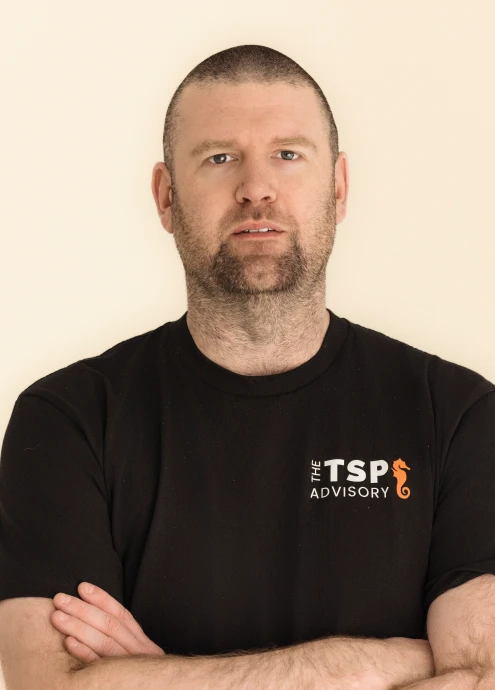
James Davis
Fractional Chief Strategy Officer
The TSP Advisory
James Davis is the longest-serving Coach/Consultant/Advisor dedicated to the Technology Services Industry across the APAC region. As a trailblazer, he was the first operations consultant in APAC, founded the region's first MSP coaching firm, launched the Pax8 Academy, and now leads as the first Fractional Chief Strategy Officer. With unmatched experience and insight, James helps elevate the industry, empower business owners to achieve stronger outcomes, and shape the next generation of leaders.